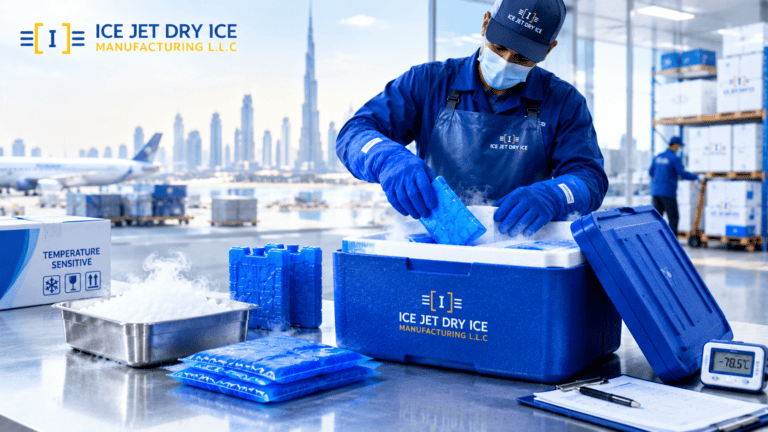
A home-delivery kitchen in Dubai packs a frozen seafood order at 4 pm, and the rider reaches a sunlit car park at 4:40. A few weeks earlier, the same business had a complaint: ice cream half-soft, prawns “not as cold as expected.” Nothing was wrong with the product. The packaging simply was not matched to the job. This is why cold chain packaging in the UAE has become such a practical topic for anyone delivering food, from online grocers and caterers to seafood distributors.
The UAE imports a large share of its food, and online grocery and frozen food delivery keep growing, especially in cities like Dubai and Sharjah. Delivery windows are getting shorter, but the heat is not getting any kinder. Below is a plain guide to the packaging tools most businesses combine: dry ice, gel ice packs, insulated boxes, and the safety gear that goes with them. For a broader view of dry ice solutions for the food industry, IceJet also covers food applications in more detail.
Why Last-Mile Delivery Is the Hardest Part of the UAE Cold Chain
Cold storage rooms and refrigerated trucks are usually well controlled. The weak point is the last stretch: loading bays, delivery bikes, parked vans, lifts, and doorsteps. Each handover adds minutes of exposure in high ambient temperatures.
That is why packaging, not just the vehicle, decides whether a product arrives in good condition. A box that performs well in a mild climate may struggle during a summer afternoon in Dubai. The same applies in winter on busy event days, when delivery volumes rise and drivers face longer waits.
In short, you are not just choosing a coolant. You are building a small, portable cold chain for every order.
Frozen or Chilled: Pick the Right Coolant First
The first question is what temperature your product actually needs.
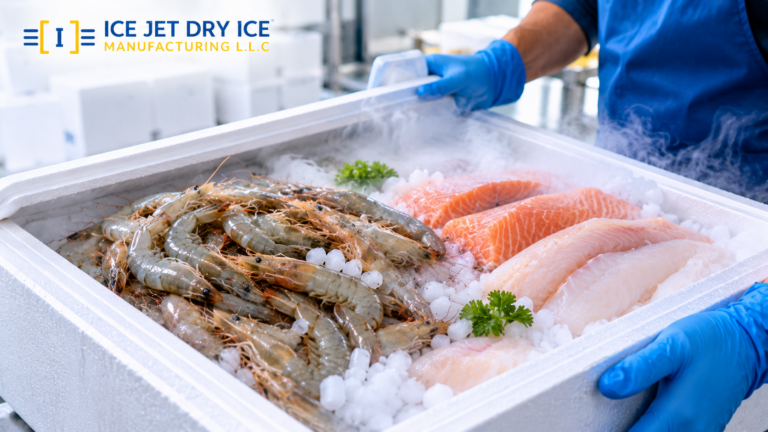
- Frozen products (frozen seafood, ice cream, frozen meat, ready meals) usually need much colder conditions, which is where dry ice is commonly used.
- Chilled products (dairy, fresh produce, and some prepared food) generally need to stay cool but not freeze, which is where gel ice packs are often a better fit.
- Mixed orders may need both, kept apart so the dry ice does not freeze chilled items.
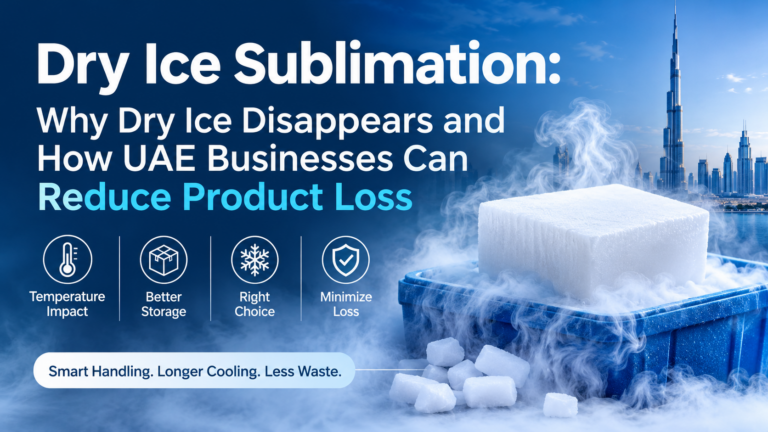
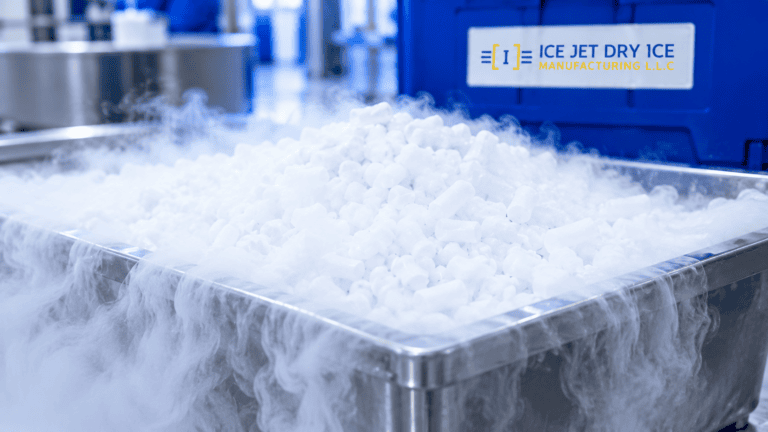
Dry ice is solid carbon dioxide at about -78.5°C and leaves no liquid behind as it sublimates. Gel ice packs are reusable, stay at a milder temperature, and are easier to handle. Using the wrong one is a common cause of both thawed frozen goods and frozen-damaged fresh goods.
Gel Ice Packs: Sizes and Where They Work
Gel ice packs suit chilled deliveries and short journeys where you want controlled cooling without extremely low temperatures. They come in several formats, and the right one depends on the box size and product.
- Small packs (for example 100g, 200g): suit small boxes, meal kits and individual parcels.
- Larger packs (for example 400g): suit bigger insulated boxes and longer routes.
- Sheets with multiple cells (for example 12 or 24 cells): can be cut or folded to wrap around products or line a box.
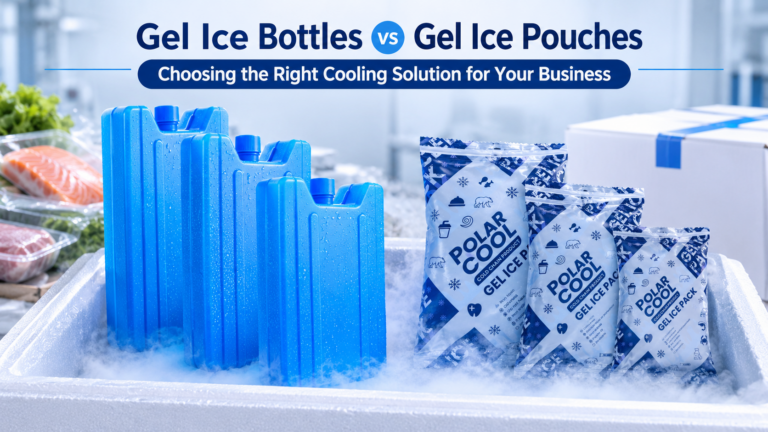
- Pouches and bottles: handy in cool bags and for reusable setups.
Reusable ice packs can also reduce waste for businesses that run daily routes and can collect packs from customers or staff. If you are comparing options, you can see available dry ice products in Dubai and related cooling items on IceJet’s product pages.
One practical tip: pre-freeze gel packs fully before packing. A half-frozen pack gives far less cooling than you expect.
Styrofoam and Insulated Boxes: The Part People Underestimate
The best coolant in the world will not help in a thin box. Insulation slows heat from entering, which means the coolant lasts longer.
When choosing a styrofoam box or insulated container, look at:
- Wall thickness: thicker walls usually mean slower heat gain.
- Size: match it to the order. A large box with empty space wastes coolant.
- Lid fit: a poorly fitting lid lets heat in and cold out.
- Suitability for dry ice: if the box will hold dry ice, it must not be airtight. Gas has to escape.
An insulated dry ice container designed for the job is often a better choice than improvising, especially for repeat deliveries.
Putting It Together: A Simple Packing Method
Here is a practical sequence many food businesses follow:
- Pre-cool the box and product before packing, if possible.
- Place a layer of coolant at the bottom (dry ice for frozen goods, gel packs for chilled).
- Add a barrier such as cardboard between the coolant and food if there is any risk of direct contact.
- Pack the product tightly and fill empty space so nothing moves.
- Add coolant on top, because cold air sinks.
- Close the lid without sealing the box airtight if dry ice is inside.
- Label the package clearly and hand it over quickly.
There is no single amount of coolant that works for every order. The right quantity depends on the product weight, box design, journey time, and outside temperature, so run a trial with your actual boxes and routes, ideally with a temperature logger, before you scale up.
Safety Gear: Cryogenic Gloves and Cryo Aprons
Dry ice causes cold burns on bare skin, and the team packing orders is exposed every day. Basic protective equipment is not optional.
- Cryogenic gloves: insulated gloves designed for very cold materials. Choose a comfortable fit so staff can actually work in them.
- Cryo apron: protects clothing and skin from cold pieces and splashes during busy packing sessions.
- Eye protection: sensible when breaking or handling larger pieces.
- Ventilation: carbon dioxide gas can build up in small, enclosed spaces such as cold rooms, vans, or storage cupboards.
- No airtight storage: never seal dry ice in a closed container or bottle.
If you are equipping a packing area, check the available cryogenic gloves in Dubai and cryo aprons that suit your team. Also train staff on what to do if someone feels dizzy or short of breath near dry ice, and follow carrier rules if you ship by air or courier.
Common Mistakes in UAE Cold Chain Packaging
- Using dry ice for products that should not freeze.
- Using gel packs alone for items that must stay frozen.
- Oversized boxes with lots of empty space.
- Sealing dry ice in an airtight box.
- Skipping trials and guessing quantities.
- Leaving packed boxes standing in the heat before dispatch.
- Storing dry ice in a sealed room or vehicle cabin.
Where to Source Cold Chain Packaging in Dubai
It helps to buy coolants, boxes, and safety gear from one supplier that understands how they work together. IceJet Dry Ice Manufacturing L.L.C. is a dry ice manufacturer and supplier based in Dubai, offering dry ice alongside related products such as gel ice packs, insulated boxes and handling equipment. Availability and delivery options can be confirmed directly with the team.
If you want advice on matching products to your delivery routes, you can speak with a dry ice supplier in Dubai about your box sizes, order volumes, and timing. For a deeper look at shipping, read about dry ice for shipping in Dubai and the UAE.
Frequently Asked Questions
What is the best cold chain packaging for food delivery in the UAE?
It depends on whether the product is frozen or chilled. Frozen goods commonly use dry ice in a ventilated insulated box, while chilled goods usually use gel ice packs. Always test with your own packaging.
Can I use gel ice packs and dry ice together?
Yes, for mixed orders, but keep them separated with a barrier so the dry ice does not freeze chilled items.
Are styrofoam boxes suitable for dry ice?
Insulated boxes are widely used, but the box must allow carbon dioxide to escape. Do not seal it airtight.
Do I need cryogenic gloves for dry ice?
Yes. Dry ice can cause cold burns, so insulated gloves are strongly recommended for anyone handling it.
How much coolant should I put in each box?
There is no universal figure. Quantity depends on product weight, box design, journey time, and temperature, so use trials and temperature loggers.
Where can I buy gel ice packs and dry ice in Dubai?
You can contact a local supplier such as IceJet to discuss products, quantities, and delivery for your business.
Conclusion
Good cold chain packaging in the UAE comes down to matching the coolant to the product, using insulated boxes that fit the order, and protecting the people who handle them. Test before you scale, and keep safety simple and consistent.
To explore coolant and handling options for your business, browse IceJet’s products or send your requirements to the team.