Transporting pharmaceutical products requires careful temperature control. Medicines, laboratory samples and other temperature-sensitive materials may need specific conditions throughout their journey to maintain their quality and stability.
For some shipments, dry ice can provide the very low temperatures required during transportation. However, it is not suitable for every pharmaceutical product. The right cooling method depends on the product’s storage requirements, the packaging used and the expected transit time.
For businesses involved in pharmaceutical logistics in Dubai and across the UAE, understanding when dry ice is appropriate can help make shipping arrangements more reliable.
Why Temperature Control Matters in Pharmaceutical Shipping
Pharmaceutical products can be sensitive to changes in temperature. If a shipment becomes too warm or too cold, the product may lose its stability or become unsuitable for use.
Maintaining the correct conditions requires more than choosing a cooling material. Businesses must consider packaging, transport duration, handling procedures and temperature monitoring throughout the journey.
Before arranging a shipment, consider:
- The manufacturer’s recommended storage temperature
- The expected delivery time and possible delays
- The insulation and performance of the packaging
- The need for temperature monitoring
- Handling procedures during loading, transport and delivery
- Storage conditions at the receiving facility
These factors are particularly important when products move between pharmaceutical warehouses, laboratories, healthcare facilities and distribution centres.
When Should Dry Ice Be Used for Pharmaceutical Shipping?
Dry ice is solid carbon dioxide that remains at approximately −78.5°C under normal atmospheric pressure. Unlike regular ice, it changes directly from a solid into gas without melting into liquid water. This process is known as sublimation.
Because of its extremely low temperature, dry ice is used in certain applications that require frozen conditions during transport.
Frozen pharmaceutical products
Some pharmaceutical materials require frozen storage and transportation. Dry ice may be appropriate when the product’s documented requirements and the validated packaging system specifically allow its use.
Laboratory samples and research materials
Certain laboratory samples and research materials must be kept at very low temperatures to maintain their condition. The suitable cooling method depends on the material, its handling instructions and any applicable transport requirements.
Temperature-sensitive biological materials
Some biological materials require specialised temperature-controlled transport. In these cases, the packaging and cooling method must be selected according to the material’s specific requirements.
An important consideration: Not all medicines or vaccines should be transported using dry ice. Some require refrigerated conditions, while others may be damaged by freezing. Always follow the manufacturer’s storage instructions and the applicable shipping procedures.
Dry Ice vs Gel Ice Packs: Which Is Better for Shipping?
Choosing the right cooling method depends on the temperature your shipment needs to maintain. Dry ice and gel ice packs serve different purposes, so the best option depends on the products being transported.
| Factor | Dry Ice | Gel Ice Packs |
| Typical application | Certain frozen or very-low-temperature shipments | Many chilled shipments, depending on the pack specification |
| Moisture | Sublimates directly into gas | May cause condensation depending on the pack and packaging |
| Temperature | Extremely low temperature | Depends on the gel formulation and conditioning |
| Packaging | Requires suitable insulation and safe gas release | Requires suitable insulation and a validated pack arrangement |
| Selection | Based on the shipment’s specific temperature requirements | Based on the required temperature range and transit conditions |
For example, a shipment that must remain frozen may require a different solution from one that needs to stay chilled without freezing.
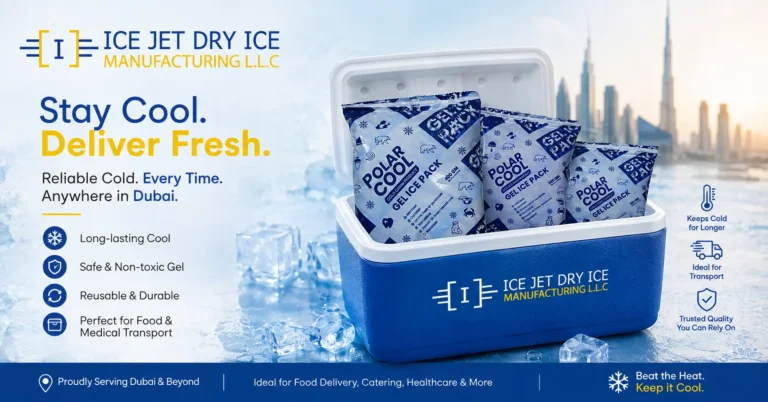
Businesses looking for alternatives can explore reusable gel ice packs for coolers in Dubai and compare the available options against their shipment requirements.
Neither cooling method is automatically better for every application. The decision should be based on product stability, packaging performance and the conditions expected during transport.
How to Plan Dry Ice Packaging for Pharmaceutical Transport
Proper packaging helps maintain the required temperature and protects products during transit. The amount of dry ice needed depends on several factors, so a single quantity cannot be recommended for every shipment.
1. Confirm the required temperature
Start by checking the product’s storage and transportation instructions. Establish whether the shipment requires chilled, frozen or another controlled temperature range before choosing a cooling method.
2. Choose suitable insulated packaging
Use packaging designed for the intended temperature conditions. The packaging must protect the product and allow carbon dioxide gas to escape safely.
Never place dry ice inside a completely airtight container. As it sublimates, the gas can build up pressure and cause the container to rupture.
3. Estimate the total shipping time
Consider the complete journey, including collection, transfers, delivery and possible delays. A shipment travelling for several hours may require a different packaging arrangement from one travelling for a longer period.
Dry ice gradually decreases in quantity as it sublimates. Its effective duration depends on insulation, ambient temperature, package design and other conditions.
4. Determine the required quantity
The amount of dry ice should be calculated using suitable packaging qualification data, expected transport conditions and the duration of the shipment.
Avoid relying on general estimates without considering the actual packaging system and product requirements.
5. Monitor temperature when required
Temperature-monitoring devices can help confirm whether a shipment has remained within its permitted range. Follow the applicable shipping procedure and document any temperature excursions that require assessment.
6. Prepare for delivery and receiving
The receiving team should understand how to handle the package safely and maintain the required conditions after delivery. Clear instructions can help prevent unnecessary delays and handling errors.
Dry Ice Safety During Transportation
Dry ice must be handled carefully because of its extremely low temperature and the carbon dioxide gas it releases.
Businesses should follow these basic precautions:
- Wear suitable insulated gloves and eye protection when handling dry ice.
- Avoid direct skin contact, as it can cause cold burns or frostbite.
- Handle dry ice in well-ventilated areas to reduce the risk of carbon dioxide accumulation.
- Never store dry ice in airtight containers.
- Assess ventilation requirements when transporting or storing dry ice.
- Train employees in appropriate handling procedures and emergency precautions.
- Follow the relevant carrier requirements for packaging, labelling and documentation.
For pharmaceutical shipments, the packaging must also prevent unwanted direct contact between the dry ice and the product when such contact is not permitted.
Air cargo shipments may be subject to specific dangerous-goods requirements. Businesses should confirm the latest applicable regulations and carrier instructions before dispatch.
Pharmaceutical Cold-Chain Logistics in Dubai and the UAE
Dubai is an important hub for regional and international logistics, including the transportation of pharmaceutical products.
On 2 October 2026, Emirates SkyCargo reported that it had transported more than one million pharmaceutical shipments through Dubai via its specialised pharmaceutical service. This development highlights the scale of pharmaceutical logistics activity in the region and the importance of managing temperature-sensitive shipments carefully.
For businesses operating in the UAE, maintaining the required temperature involves more than selecting the right cooling material. Packaging, transport coordination, monitoring and appropriate handling all contribute to a well-managed cold chain.
Dry ice can be part of this process when the shipment’s requirements call for it. However, each product and packaging arrangement must be assessed individually.
Choosing a Dry Ice Supplier in Dubai
For businesses that require dry ice for temperature-sensitive transport or other applications, choosing the right product format and planning the supply in advance are important considerations.
Before placing an order, consider:
- The application and required temperature conditions
- Whether dry ice pellets or blocks are more suitable
- The quantity required for the planned shipment
- The expected collection or delivery schedule
- Safe storage and handling arrangements
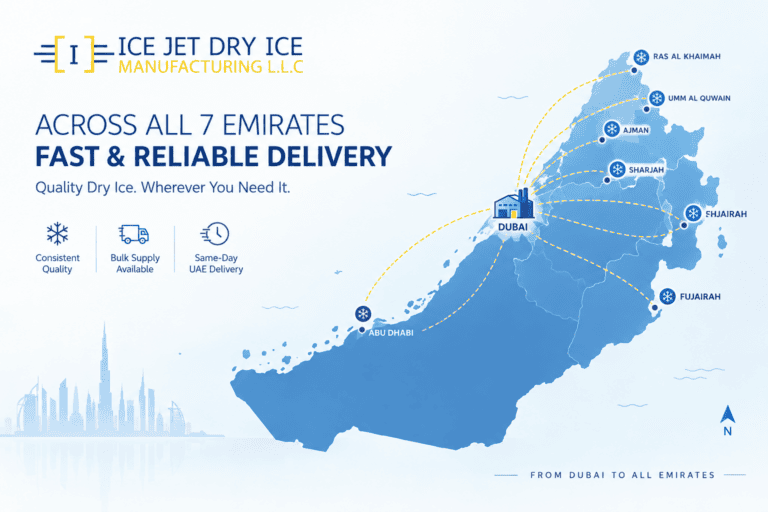
IceJet Dry Ice Manufacturing L.L.C. supplies dry ice products for business and industrial applications in Dubai and across the UAE.
If your business is looking for a dry ice supplier in Dubai, explore the available information about IceJet’s dry ice supply and identify the product format that best suits your requirements.
You can also visit our dry ice supplier contact page to discuss your requirements and arrange your next supply.
Plan Your Dry Ice Requirements with IceJet UAE
Reliable temperature-controlled shipping starts with understanding the product’s requirements and selecting a suitable packaging and cooling method.
If your business needs dry ice for an application that requires frozen or very low-temperature conditions, IceJet Dry Ice Manufacturing L.L.C. can help you explore the available dry ice product options for your operational needs.
Visit IceJet UAE to learn more about our dry ice products and discuss your supply requirements in Dubai and across the UAE.
Frequently Asked Questions
Q. Is dry ice suitable for all pharmaceutical shipments?
No. Dry ice should be used only when the product’s documented temperature requirements and shipping procedure allow it. Some pharmaceutical products require refrigeration and may be damaged by freezing.
Q. How long does dry ice last during shipping?
There is no fixed duration for every shipment. It depends on the quantity used, insulation, packaging design, environmental conditions and total transport time.
Q. Can dry ice be used to transport laboratory samples?
Yes, for certain samples that require frozen or very low-temperature conditions. The correct cooling method depends on the sample’s handling instructions and applicable transport requirements.
Q. Is dry ice better than gel ice packs for pharmaceutical transport?
Not in every situation. Dry ice is suitable for certain frozen shipments, while gel ice packs are commonly used for chilled shipments. The correct choice depends on the product’s required temperature range and validated packaging system.
Q. Does dry ice melt during transportation?
No. Under normal atmospheric pressure, dry ice changes directly from a solid into carbon dioxide gas through sublimation. It does not melt into liquid water.
Q. What packaging is required for dry ice shipping?
Suitable insulated packaging is generally required, along with a design that allows carbon dioxide gas to escape safely. Additional requirements may apply depending on the carrier and type of shipment.
Q. Where can businesses buy dry ice in Dubai?
Businesses can contact IceJet Dry Ice Manufacturing L.L.C. to discuss dry ice supply requirements in Dubai and across the UAE.