Every hospital lab, IVF clinic, food processing plant, and research facility in the UAE eventually runs into the same question: which liquid nitrogen tank actually fits our operation? Get it wrong, and you’re either overpaying for capacity you’ll never use or refilling a tank that’s too small every other day while your team scrambles to keep samples from warming up.
This guide walks through everything you need to know before buying cryogenic storage tanks in the UAE, from compact dewars and small liquid nitrogen containers for a single clinic room up to bulk cryogenic tanks feeding an entire production line. By the end, you’ll know exactly what size, type, and holding time spec to ask for.
What a Liquid Nitrogen Tank Actually Does
Liquid nitrogen sits at roughly -196°C. No ordinary container can hold it. A single-walled vessel would crack under the temperature stress and lose its contents within hours as the liquid boils off into gas.
A proper liquid nitrogen tank, sometimes called a cryogenic container, solves this with a vacuum-insulated double-wall design. The gap between the inner and outer shell is sealed under vacuum, which is one of the best insulators available, since heat from the surrounding air simply has nowhere to travel through. That’s what allows the nitrogen inside to stay liquid for days or weeks rather than hours, and it’s the entire reason cryogenic storage tanks look and cost so differently from a standard flask.
In Dubai specifically, this insulation matters even more than in cooler climates. Ambient heat above 45°C in summer accelerates the boil-off rate of any cryogenic vessel sitting outdoors or in a poorly ventilated storage room, so tank quality and insulation grade directly affect how often you’re paying for refills.
The Three Main Types of Liquid Nitrogen Tanks
Not every application needs the same build. Broadly, the cryogenic containers used across the UAE fall into three categories.
1. Dewar Tanks (Small Liquid Nitrogen Containers)
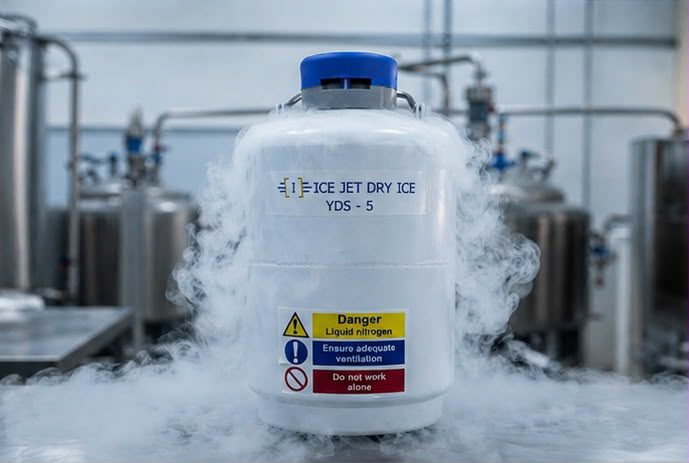
These are the portable, hand-carryable options, typically holding anywhere from a few liters up to around 50 liters depending on the model. A small liquid nitrogen container in this class is the right call for:
- IVF clinics storing a modest number of samples
- Small labs and diagnostic centers running occasional cryogenic tests
- Veterinary clinics and cryotherapy practices
- Schools and universities using nitrogen for demonstrations or training
Dewars need no external power or pump. The nitrogen simply sits inside the vacuum-insulated chamber and is drawn out manually when needed. Their main advantage is flexibility. You can move one between rooms or even between sites, and there’s minimal setup involved.
2. Self-Pressurized Cryogenic Tanks
These step up in both size and function. A built-in pressure building coil lets the tank dispense nitrogen on demand without a separate pump, which suits facilities that draw nitrogen daily, such as busy labs, clinics running regular procedures, or small-scale food processing operations. They sit in a middle ground: bigger than a dewar, but still far more manageable than a full bulk storage system.
3. Bulk Cryogenic Storage Tanks
At the top end, bulk tanks are built for continuous, high-volume use such as hospitals with large sample banks, gas distribution companies, and manufacturing plants that run nitrogen fed processes around the clock. These come with pressure monitoring, safety relief systems, and reinforced piping, and are usually installed in a fixed location rather than moved around a facility.
Comparing Tank Types at a Glance
| Tank Type | Typical Capacity | Best For | Portability | Refill Frequency |
| Dewar / Small Container | Few litres to 50L | Clinics, small labs, schools | High, hand carried | More frequent, smaller top ups |
| Self-Pressurized Tank | Mid range | Labs & clinics with daily use | Low, semi fixed | Moderate |
| Bulk Storage Tank | Large industrial volumes | Hospitals, factories, gas suppliers | Fixed installation | Scheduled supply contract |
How to Choose the Right Size: Four Questions to Ask
1. How much liquid nitrogen do you actually go through in a week?
Light, occasional use such as a handful of samples or periodic tests points to a small liquid nitrogen container. Daily draw down in a busy clinic or lab points toward a self-pressurized or larger tank.
2. Does the tank need to move, or will it stay in one place?
If your team needs to carry nitrogen between rooms, buildings, or even client sites, think mobile cryotherapy or field research, a compact dewar wins on practicality every time. If it’s feeding fixed equipment, a larger stationary tank is more efficient.
3. What are you actually storing?
Biological samples and embryos need consistent, unbroken cold; any gap in supply is a real risk. Industrial cooling processes can usually tolerate more flexibility. This affects not just tank size but how much buffer capacity you should keep on hand before your next scheduled refill.
4. How far are you from your supplier?
This is a bigger factor in the UAE than people expect. A facility in central Dubai near a supplier’s warehouse can run a slightly smaller tank and top up quickly when needed. A site further out, in the northern Emirates or an industrial zone with longer delivery lead times, is usually better served by a tank with a longer holding time, so you’re not caught short between deliveries.
If you’re unsure which category you fall into, it’s worth a quick conversation with your supplier before ordering. Undersizing a tank is a far more common, and costly, mistake than oversizing one.
Where Liquid Nitrogen Tanks Are Used Across the UAE
Healthcare and IVF clinics rely on cryogenic storage tanks to keep embryos, sperm, and tissue samples viable for extended periods. This is one of the most cold sensitive uses of liquid nitrogen anywhere, and tank reliability directly affects patient outcomes.
Diagnostic and research laboratories use smaller containers day to day for sample preservation and specific test procedures that require ultra low temperatures.
Food processing facilities use liquid nitrogen for cryogenic freezing, flash freezing product at a rate that prevents large ice crystals from forming inside the food, which preserves texture and quality far better than a standard freezer.
Manufacturing and metalworking operations use liquid nitrogen to rapidly cool metal components, and in some processes to shrink fit parts so they can be assembled into tighter tolerances than would otherwise be possible.
Educational institutions use small liquid nitrogen containers for science demonstrations, physics and chemistry coursework, and lab training.
Safety and Handling: What Comes With the Tank Matters
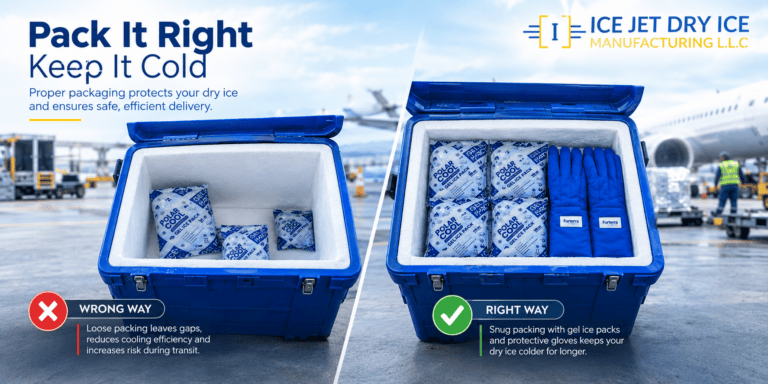
A cryogenic storage tank is only as safe as the handling practices around it. Liquid nitrogen at -196°C can cause severe cold burns on contact, and in poorly ventilated spaces the displaced oxygen from boil off gas is a genuine hazard. Any facility bringing in a liquid nitrogen tank should also have cryogenic rated gloves for anyone handling the tank or dispensing nitrogen, a cryo apron for full arm and torso protection during transfer, basic ventilation in the storage room, especially for larger installations, and staff training on safe filling, dispensing, and emergency procedures.
IceJet supplies the gloves, aprons, and other liquid nitrogen safety equipment alongside our tanks, and our team walks new clients through safe handling before their first use. This isn’t something to treat as optional once the tank is on site.
Maintenance: Getting the Most Out of Your Cryogenic Container
A well built tank should hold cold for many days between refills, but that depends on the tank being treated correctly. Keep the tank out of direct sun and away from heat sources where possible, since even a good vacuum seal has limits against Dubai’s peak summer temperatures. Don’t leave the tank open longer than necessary when dispensing, since every extra minute open speeds up boil off. Check the vacuum seal periodically, as a damaged seal is the single most common reason a cryogenic container starts losing cold faster than it used to. Match your refill schedule to actual usage rather than guessing, since running a tank close to empty between scheduled deliveries increases the risk of running short unexpectedly.
Buying Locally in the UAE vs Importing
Some UAE businesses still default to importing cryogenic tanks, assuming it’s cheaper. In practice, this usually means longer lead times, higher shipping costs for a heavy, specialized item, and no local support if something needs servicing. A Dubai based supplier that manufactures and stocks tanks locally can typically offer same day or next day delivery, immediate replacement parts, and a team that already understands how the local heat affects tank performance, something an overseas supplier simply can’t speak to with the same authority.
Why Businesses Across the UAE Choose IceJet for Liquid Nitrogen Tanks
Ice Jet Dry Ice Manufacturing LLC is a DED licensed, Dubai Chamber of Commerce member supplier based in Al Quoz Industrial Area, and we manufacture and stock liquid nitrogen tanks in Dubai across all three categories, from small liquid nitrogen containers for clinics and labs, up to bulk cryogenic storage tanks for industrial operations. Every tank we supply is built to perform through Dubai’s summer heat without losing capacity, which means fewer refills and less downtime for your team.
We don’t just deliver and leave. Our team helps size the right cryogenic storage tank for your UAE facility, sets it up on site, and trains your staff on safe handling. For businesses that go through nitrogen regularly, we also set up scheduled supply plans so you’re never caught waiting on a delivery.
Frequently Asked Questions
What size liquid nitrogen tank do I need for a small clinic?
Most small clinics and labs are well served by a dewar style small liquid nitrogen container, typically in the lower litre range. If your team draws nitrogen daily rather than occasionally, a self-pressurized tank may be a better long term fit, since usage frequency matters more than clinic size alone.
How long does liquid nitrogen stay cold inside a cryogenic storage tank?
This depends on the tank’s build quality and vacuum insulation. A well made tank can hold liquid nitrogen for many days, and some models substantially longer, though heat exposure and how often the tank is opened both affect the actual holding time.
Is it safe to store a liquid nitrogen tank indoors?
Yes, provided the room has adequate ventilation. Because boil off gas displaces oxygen, small enclosed rooms with a large tank need airflow or ventilation to keep the space safe for staff.
What’s the difference between a dewar and a cryogenic storage tank?
A dewar is a smaller, portable vessel suited to light or occasional use, while a cryogenic storage tank generally refers to larger, often stationary systems built for continuous or industrial scale nitrogen use. Both use the same vacuum insulation principle, just at very different scales.
Can I set up scheduled liquid nitrogen refills instead of ordering each time?
Yes. Many clinics, labs, and manufacturers in the UAE run on a weekly or monthly supply schedule rather than one off orders, which removes the risk of running short unexpectedly.
Do you deliver liquid nitrogen tanks across the whole UAE, or just Dubai?
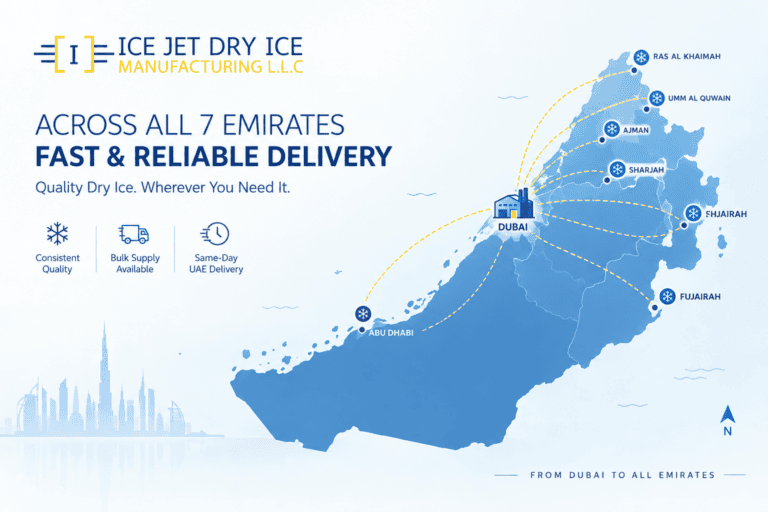
IceJet delivers liquid nitrogen tanks and cryogenic storage equipment across Dubai and the wider UAE, with same day delivery available in most cases.
Ready to Find the Right Tank for Your Facility?
Whether you need a small liquid nitrogen container for a clinic room or a bulk cryogenic storage tank for an industrial process, IceJet’s team in Al Quoz Industrial Area can help you size it correctly the first time, and keep you supplied without the guesswork.
Call or WhatsApp: +971 555 444 118
Visit us: 33, Street 16 B, Al Quoz Industrial Area – 4, Dubai
Talk to our team today and get a tank sized around exactly how your business uses liquid nitrogen.