If you have ever needed to send a medical sample overnight, carry frozen food back home after a trip, or export seafood by air from Dubai, you have probably wondered whether dry ice is even allowed on a plane in the first place. It is a fair question, and the honest answer is yes, but with real rules attached, not just a shrug and a hope that nobody notices the fog coming out of your cooler at check in.
This guide walks through what international aviation rules actually say about flying and shipping dry ice, what that means practically if you are working with a dry ice supplier in Dubai or anywhere else in the UAE, and how to avoid the kind of packaging mistake that gets a shipment rejected at the airport.
Why Dry Ice Counts as a Dangerous Good on Aircraft
If you are moving temperature sensitive samples for medical or lab work, the rules below matter just as much as they do for food or general commercial exports.
This surprises a lot of first time shippers. Dry ice is classified internationally as UN1845, a Class 9 dangerous good, not because it is flammable or toxic, but because of what happens as it sublimates. As solid carbon dioxide turns into gas inside an aircraft hold, it can build up pressure in a sealed container and, in large enough quantities, reduce oxygen levels in a confined space. Neither is a risk with a small cooler in your car, but on an aircraft carrying passengers and cargo at altitude, both matter enough that the International Air Transport Association, or IATA, regulates it under a specific packing instruction.
None of this means dry ice is dangerous to use normally. It just means airlines and cargo handlers need to know exactly how much is on board and how it is packaged, which is exactly why the rules below exist.
How Much Dry Ice Can a Passenger Bring on a Flight
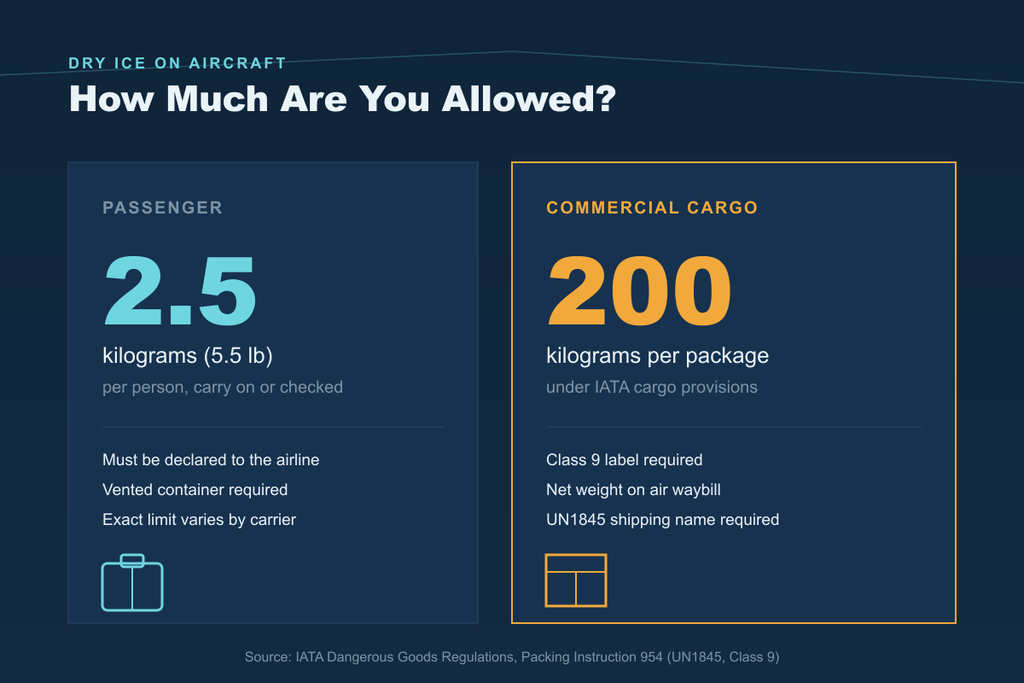
If you are traveling as a passenger, whether carrying dry ice in checked luggage or a carry on, the general international limit is around 2.5 kilograms, or about 5.5 pounds, per person. This is the baseline set under IATA rules, though individual airlines can apply their own specific procedures within that framework, so it is always worth confirming directly with your airline, whether that is Emirates, flydubai, Etihad, or another carrier, before you arrive at the airport with a cooler full of dry ice.
A few practical points that matter more than people expect:
The package needs to allow gas to escape. A sealed, airtight cooler is exactly what airlines are trying to avoid, so use a container with a loose fitting lid or built in venting, not something you have taped shut.
You generally need to tell the airline you are carrying dry ice, either at check in or when booking, rather than assuming it will go unnoticed. It usually will not, and undeclared dry ice can cause delays or refusal at the gate.
The packaging should be labeled to show what is inside and the approximate net weight, which also protects you if questions come up during security screening.
How Commercial Shipments and Cargo Work Differently
If you are exporting goods commercially, whether that is seafood, pharmaceuticals, or lab samples moving out of Dubai, the rules shift into cargo territory, and the numbers change considerably. Commercial shipments can carry substantially more dry ice per package, up to around 200 kilograms under IATA provisions, provided the shipment is properly documented and labeled as a Class 9 dangerous good.
This is where documentation becomes non negotiable rather than a nice to have. A compliant commercial shipment typically needs the proper shipping name marked on the package, either “dry ice” or “carbon dioxide, solid,” the UN1845 designation, the Class 9 hazard label, and a clear net weight declaration in kilograms on the air waybill. Missing the weight declaration is one of the most common reasons cargo gets held up or refused by an airline, since the carrier needs that figure to calculate how much carbon dioxide gas the shipment will release during the flight.
If your business regularly relies on dry ice for shipping temperature sensitive goods out of Dubai or as part of a wider logistics operation across the UAE, it is worth building these documentation steps into your standard packing process rather than figuring out at the airport counter under time pressure.
Getting the Packaging Right
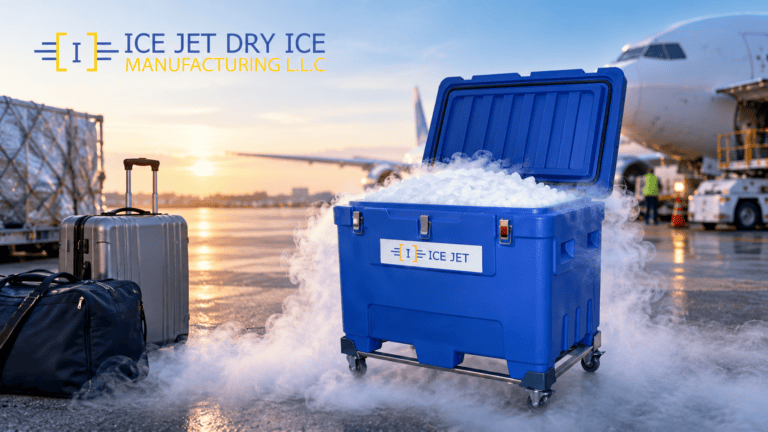
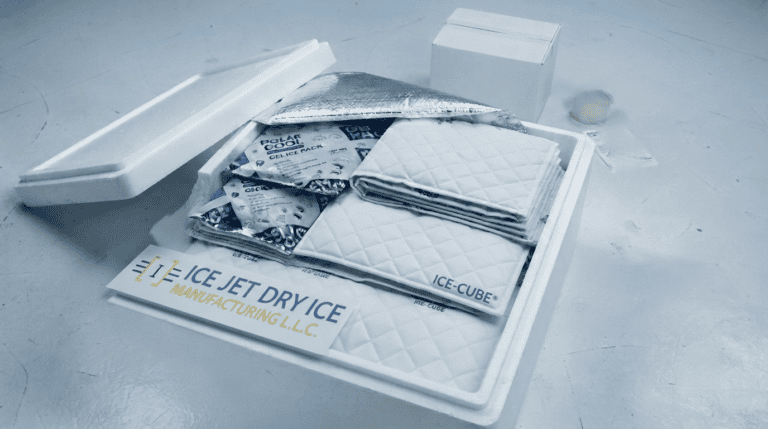
Whether you are a passenger or shipping commercially, the packaging principle is the same. Dry ice needs a container that insulates well enough to slow sublimation but still allows carbon dioxide gas to vent safely. A properly designed insulated box, like the insulated dry ice storage containers and styrofoam shipping boxes built specifically for this purpose, handles both requirements at once, which is very different from repurposing a regular sealed cooler and hoping for the best.
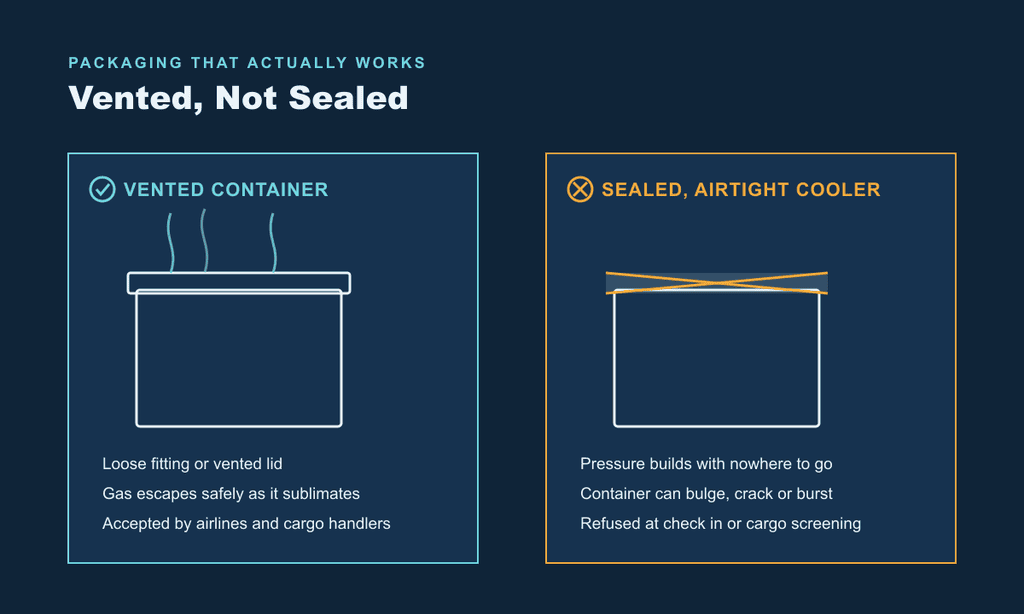
Getting this step wrong is usually what causes rejected shipments, not the dry ice itself. A well packaged, properly labeled shipment tends to move through airline and customs checks without issue, while a hastily packed one raises questions that can delay or cancel a shipment entirely.
What This Means If You Are Sourcing Dry Ice in Dubai for Travel or Export
If you already know you need to fly or ship with dry ice, the smartest move is to buy from a dry ice supplier in the UAE who understands these packaging and labeling requirements rather than treating dry ice as a generic product handed over in a plastic bag. A supplier who regularly works with export businesses, labs, and logistics companies will typically know how to pack and label a shipment correctly the first time, which saves you the risk of a rejected package on travel day.
This is also where working with a genuine dry ice manufacturer rather than a small reseller tends to pay off, since manufacturers producing on site are generally set up with proper insulated packaging as a standard part of the order rather than an afterthought.
If you need dry ice quickly before a flight or export deadline, our guide to finding dry ice near you across the UAE and our page covering dry ice delivery in Dubai both cover how fast same day delivery typically works, which matters given how little time dry ice can sit around before you need to be at the airport. If you are specifically exporting through Dubai’s airport cargo terminals, our separate guide on finding dry ice near you for airport cargo walks through that process in more detail.
A Quick Word on Customs for Commercial Exports
Beyond the airline side, commercial exporters shipping temperature sensitive goods out of Dubai should also confirm any customs documentation requirements for the shipment itself, separate from the dry ice packaging rules. This varies depending on what is inside the package, whether food, pharmaceuticals, or biological material, so it is worth checking directly with your freight forwarder or Dubai Customs for the specific product category rather than assuming the dry ice rules cover everything on their own. The dry ice packaging and labeling rules above apply regardless, but the product itself may carry its own separate documentation needs.
Frequently Asked Questions
Q. Can I bring dry ice on a flight from Dubai?
Generally yes, in limited quantities, typically around 2.5 kilograms per passenger, in a vented rather than airtight container, and only after informing the airline. Always confirm the exact limit with your specific carrier before traveling.
Q. How much dry ice can be shipped as cargo?
Commercial shipments can carry considerably more, up to around 200 kilograms per package, provided the shipment is properly labeled as a Class 9 dangerous good with a clear net weight declaration on the air waybill.
Q. Why does dry ice need special packaging for flights?
Because it sublimates into carbon dioxide gas, packaging must allow that gas to vent safely rather than build up pressure inside a sealed container, which is why airtight coolers are not suitable for flying with dry ice.
Q. Do I need to declare dry ice at the airport?
Yes. Airlines generally require passengers to inform them that they are carrying dry ice, either during booking or at check in, so it can be accounted for correctly.
Q. Should I buy dry ice from a supplier who understands export rules?
It helps considerably. A dry ice supplier in Dubai experienced with export and travel packaging is far less likely to send you off with a container that gets rejected at the airport.
Need Dry Ice Packed Correctly Before You Fly or Ship?

Ice Jet Dry Ice Manufacturing LLC supplies properly insulated, vented packaging alongside every order, whether you need a small quantity for personal travel or a larger commercial shipment ready for export documentation. Same day delivery is available across Dubai and the wider UAE.
Call us on +971 555 444 118, message us on WhatsApp, or get in touch with our team for pricing and availability before your travel or shipping date.