Dry ice reaches about minus 78.5 degrees Celsius, cold enough to cause serious skin injury in seconds of direct contact. Most buyers in Dubai focus entirely on the dry ice itself, the size, the quantity, and the price, and never think about what they will actually use to handle it once it arrives. That gap is where avoidable injuries and damaged surfaces happen.
This guide covers the three pieces of safety gear that matter most for everyday dry ice handling in the UAE: cryogenic gloves, a cryo apron, and a swizzle stick, what each one is for, and how to choose the right one.
Why Ordinary Gloves Are Not Enough
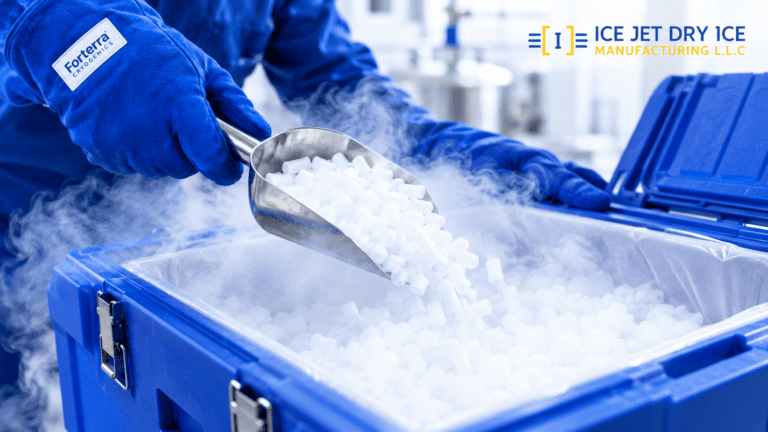
A kitchen oven mitt or a standard work glove is built to handle heat, not extreme cold. At dry ice temperatures, thin or non-insulated materials lose their protective value almost immediately, and prolonged or repeated contact can cause frostbite-style burns. Cryogenic gloves are purpose-built with thick, low-temperature-rated insulation that is tested to handle contact with dry ice and other extreme cold materials, not just resist it briefly.
If your staff are currently using regular gloves or, worse, bare hands with a cloth, that is the first thing worth fixing before your next delivery.
What to Look For in Cryogenic Gloves
- Cold rating. The glove should be specifically rated for cryogenic or extreme cold use, not general-purpose cold weather gear.
- Length. Gloves that extend past the wrist, rather than stopping at the palm, protect against pellets or fragments falling inside the glove during scooping.
- Grip. A textured palm matters more than it sounds, since wet or frosted dry ice containers can be slippery, and a dropped scoop near bare skin is its own risk.
- Flexibility. Gloves that are too stiff make it hard to use a shovel or close a container properly, which often leads staff to remove them partway through a task, the exact moment an injury is most likely.
Our Cryogenic Blue Gloves, 48 cm in length, are built to cover the full forearm for this reason.
Why a Cryo Apron Matters More Than People Expect
Gloves protect hands, but dry ice handling often involves scooping, pouring, or packing, all of which can bring pellets into contact with clothing or forearms. A standard apron offers no real insulation against that kind of cold, and in frequent handling environments, like event setups, food packing, or industrial cleaning, repeated small exposures add up.
A proper cryo apron adds a layer of protection across the chest and torso, the areas most exposed during pouring and packing tasks. It is a low-cost addition that is easy to skip until the first time someone gets a cold burn through a shirt. Our Cryo Apron is sized for this kind of regular handling work.
What Is a Swizzle Stick for Dry Ice, and Do You Actually Need One?
A swizzle stick is a long-handled stirring tool used to safely mix dry ice pellets into liquids, most commonly for fog effects in drinks, mocktails, and event presentations. Because it keeps the user’s hand well away from both the extreme cold and the carbon dioxide gas released at the surface, it is the correct tool for this specific job, rather than a regular spoon or stirrer.
This matters specifically for event planners, bars, and catering businesses creating dry ice fog effects in drinks or bowls, where hands are often closest to the dry ice itself. If this is a regular part of your service offering, a dedicated Swizzle Stick for Dry Ice is worth having on hand rather than improvising with kitchen tools.
A Simple Rule for Choosing Your Gear
Match the gear to how often you handle dry ice, not just how much you order:
- Occasional use, small quantities: cryogenic gloves are the minimum requirement. Do not handle dry ice with bare hands even for a few seconds.
- Regular handling, packing, or pouring: add a cryo apron to protect against repeated contact with clothing and forearms.
- Event and beverage use with fog effects: add a swizzle stick so hands stay clear of both the cold and the gas release.
- Bulk handling or transfer between containers: Pair your gloves with a proper dry ice handling shovel rather than scooping by hand, even with gloves on.
Common Handling Mistakes That Lead to Injury
- Using household gloves or oven mitts instead of cryogenic-rated gloves
- Removing gloves partway through a task because they feel too bulky
- Scooping dry ice directly with hands, even briefly, to save time
- Stirring drinks or bowls with a regular spoon instead of a swizzle stick
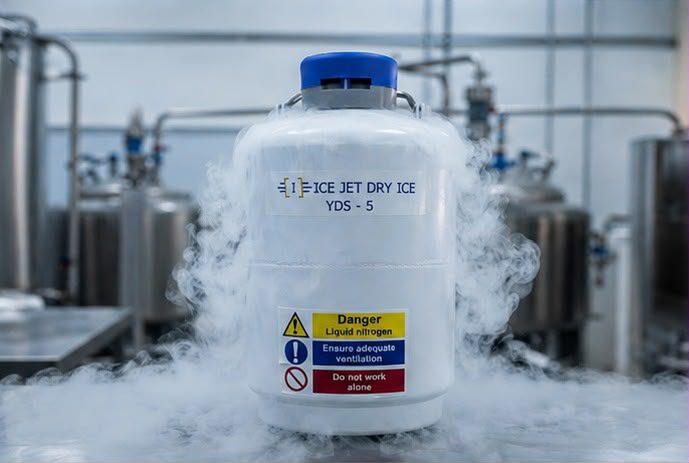
- Storing dry ice in a sealed, non-ventilated container, which also creates a pressure risk
These mistakes are more common than most businesses realize. Our guide on cold chain and cryogenic handling mistakes covers a wider set of errors beyond just safety gear, and our article on safe dry ice storage and handling in the UAE covers ventilation and storage practices in more depth.
Where to Keep Dry Ice Once You Are Handling It Safely
Safety gear protects the person handling the dry ice, but it does not slow down sublimation. For that, you need a properly insulated container. If you have not already set this up, our guide to insulated dry ice storage containers explains how to keep your dry ice colder for longer between deliveries and use.
IceJet UAE: Dry Ice and the Safety Gear to Handle It
Ice Jet Dry Ice Manufacturing LLC supplies dry ice pellets and blocks across Dubai and the UAE, along with the handling gear to go with it, including cryogenic gloves, cryo aprons, swizzle sticks, handling shovels, and insulated containers. You can see the complete range on our dry ice products and accessories page, or contact us if you are not sure which combination of gear fits how your business uses dry ice.
Frequently Asked Questions
Can I handle dry ice with regular gloves? No. Regular gloves are not rated for the extreme cold of dry ice and can allow injury through prolonged or repeated contact. Use gloves specifically rated for cryogenic or extreme cold handling.
Do I need a cryo apron if I already have gloves? If you only handle dry ice occasionally and briefly, gloves alone may be enough. If you regularly scoop, pour, or pack dry ice, an apron adds meaningful protection against contact with clothing and forearms.
What is a swizzle stick used for with dry ice? It is a long-handled tool used to stir dry ice into drinks or bowls for fog effects, keeping hands safely away from both the cold and the released gas.
Is it safe to touch dry ice briefly without gloves? No. Even brief direct contact with bare skin can cause a cold burn similar to frostbite. Always use cryogenic-rated gloves, even for short handling tasks.
Need cryogenic gloves, an apron, or a swizzle stick alongside your dry ice order? Contact IceJet UAE to add the right safety gear to your next delivery across Dubai and the UAE.