Shipping food, keeping a cooler cold on a road trip, or running a fog machine at an event—whatever the reason you’re using dry ice, the same question always comes up: how long will it actually hold before it’s gone?
A useful starting point: in a decent-quality cooler, dry ice typically disappears at a pace of about 5 to 10 lbs (roughly 2.5 to 4.5 kg) every 24 hours. That figure isn’t fixed, though — several things can speed it up or slow it down, and UAE conditions in particular tend to push that number faster than what you’d see in milder climates.
Below is a closer look at what changes that rate, along with practical ways to stretch it further.
What Changes How Fast Dry Ice Sublimates
1. How well your container is insulated
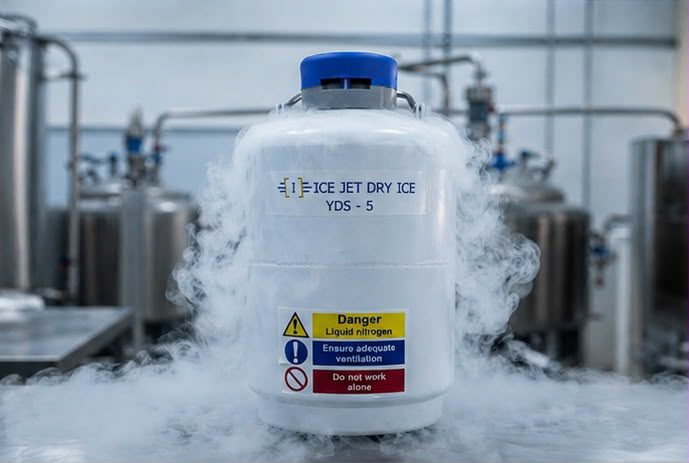
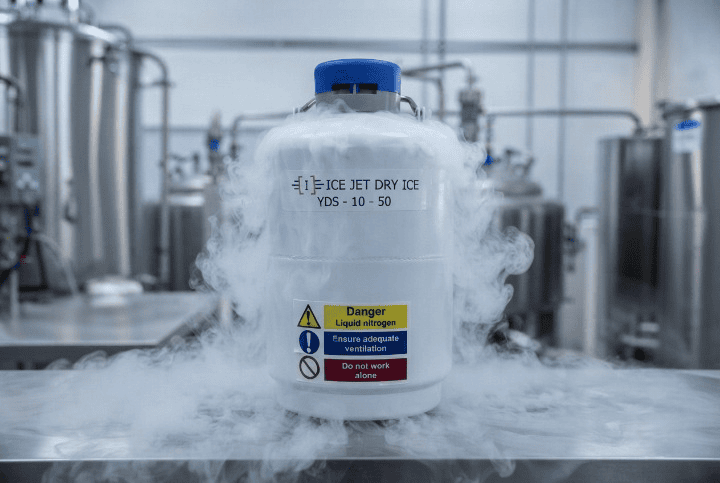
Thick-walled, properly sealed coolers hold dry ice noticeably longer than a thin foam box or an open container. A standard cooler might keep dry ice solid for one to two days, but a purpose-built insulated dry ice storage container built with heavier, double-layer insulation can stretch that out to three to five days — a meaningful upgrade if you’re storing dry ice rather than just carrying it for a short trip.
2. The temperature around it
This is where the UAE climate really comes into play. Heat accelerates the process dramatically — a cooler sitting in a car under the summer sun will lose its dry ice far quicker than one kept indoors, shaded, or in an air-conditioned space.
3. How much room is inside the container
A tightly packed container with minimal empty space holds cold more efficiently than a large box with just a little dry ice rattling around inside. More empty air means more warm air to fight against.
4. Frequency of opening the lid
Each time you open the container, the cold escapes and warmer air takes its place, speeding everything up. If you’re constantly checking on your food or supplies, expect the ice to run out sooner than expected.
5. Pellet vs. block form
Weight for weight, solid blocks outlast pellets or crushed dry ice, simply because there’s less surface area exposed to the air around them. When maximum duration matters more than rapid cooling, blocks are the smarter pick.
Rough Duration Guide by Container Size
| Container Type | Dry Ice Amount | Estimated Duration (UAE conditions) |
| Small cooler (10-20L) | 2-3 kg | 12-24 hours |
| Medium cooler (30-50L) | 5-7 kg | 24-36 hours |
| Large cooler / insulated box (50L+) | 8-10+ kg | 36-48 hours |
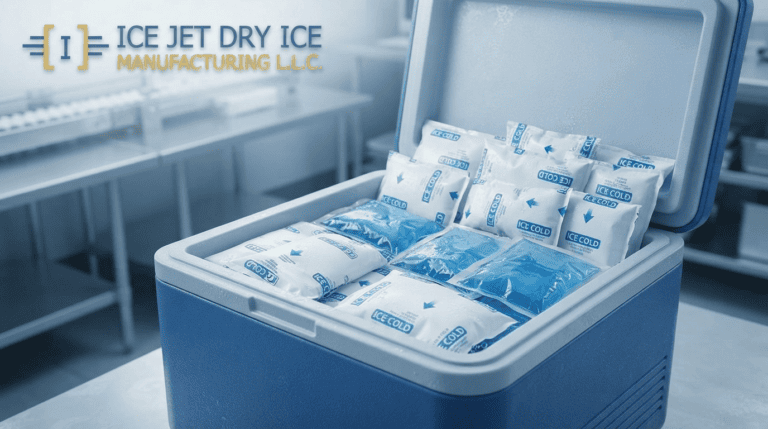
Treat these as ballpark figures—the real number shifts based on insulation, how often the box gets opened, and the surrounding temperature on the day. Need something to outlast 48 hours, whether for storage or backup cooling? A dedicated insulated dry ice storage container will outperform a regular cooler by a wide margin.
How to Stretch Dry Ice Further
- Store it somewhere cool—air conditioning, shade, or a chilled room, and keep it well away from direct sun or a parked car
- Resist opening the lid unnecessarily—plan what you need in advance instead of checking repeatedly
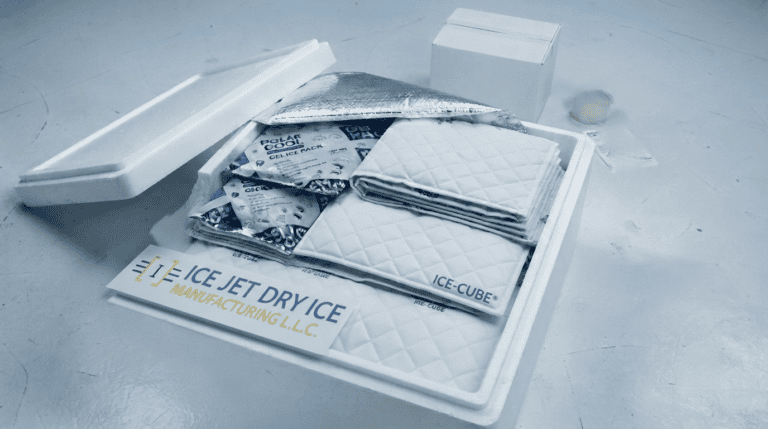
- Invest in a sturdy, well-sealed cooler rather than a cheap foam box, since the difference in retention is significant. For transporting food, samples, or anything temperature-sensitive over distance, a heavy-duty insulated styrofoam shipping box performs far better than a basic takeout container
- Go with block form over pellets when duration matters more than speed
- Add a layer of insulation inside the box, like a towel or newspaper wrapped around the ice, to slow the process slightly further
- Leave some room for gas to escape—never seal dry ice in a completely airtight container, since the CO₂ released as it sublimates can build up pressure
FAQs
1. Can dry ice go in a normal fridge or freezer?
It’s better avoided in household fridges—the intense cold (around -78.5°C) can strain or damage the thermostat and affect other items stored nearby. A cooler or purpose-made storage container is the safer option.
2. Is it okay to leave dry ice in a car with the windows up?
Best avoided. A sealed car doesn’t allow the CO₂ gas released during sublimation to escape, and in UAE heat, that gas can build up to unsafe concentrations quickly. Keep some ventilation whenever transporting it.
3. What’s the right way to get rid of leftover dry ice?
Don’t toss it in a regular bin or lock it inside a sealed container. Let it sit in a space with good airflow, away from kids and pets, until it fully turns to gas on its own.
4. Which lasts longer, pellets or blocks?
Blocks win here, thanks to less exposed surface area per unit of weight. Pellets cool things down faster initially, but they burn through faster too.
Shipping Something Over a Longer Distance?
If you’ve got food, medical samples, or other goods traveling further or taking longer than usual, it pays to work out your dry ice needs ahead of time instead of estimating on the fly. Reach out to IceJet UAE with details on your container and expected transit time, and we’ll help you figure out the right quantity and form for the job.
IceJet UAE stocks both block and pellet dry ice, with same-day delivery available across the UAE — suited to food businesses, events, medical logistics, and personal needs alike.