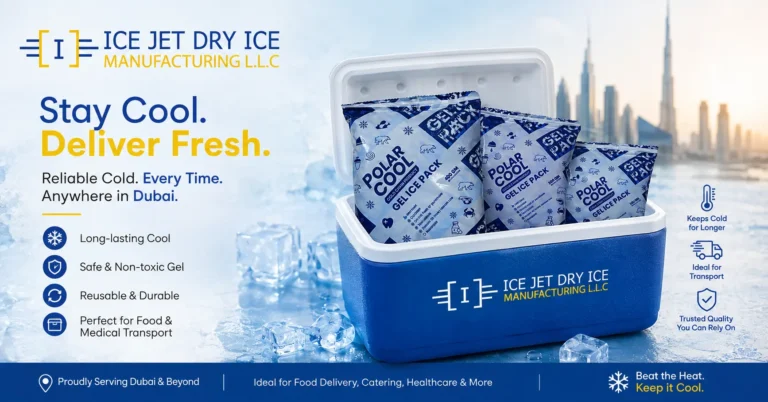
Dubai’s heat doesn’t wait for a convenient moment. A delivery that leaves a kitchen or warehouse perfectly chilled can lose its edge within thirty minutes if the cooling method wasn’t built for the route ahead. For businesses running food delivery, medical transport, or any kind of cold chain logistics across the city, the real question isn’t whether to use cooling products. It’s whether you’re using the right one for each specific delivery.
This isn’t about buying the biggest or most expensive cooling product available. It’s about matching the format to the trip, the packaging, and the product inside. Get that match wrong, and you either waste money on cooling capacity you didn’t need, or worse, deliver something that arrives warmer than it should.
Start With the Trip, Not the Product
Before choosing a cooling format, ask three practical questions. How long is the route? A quick 15 minute local drop off has very different cooling needs than a two hour multi stop run across the city. How is the item packaged? A rigid cooler behaves differently from a soft delivery bag or an irregularly shaped tray. And how sensitive is what’s inside? Vaccines and lab samples demand tighter, steadier temperature control than a casual food order that has a bit more tolerance for minor fluctuation.
Once you’ve honestly answered those three questions, picking the right cooling product becomes much simpler.
For Short, Local Deliveries: Pouches Do the Job
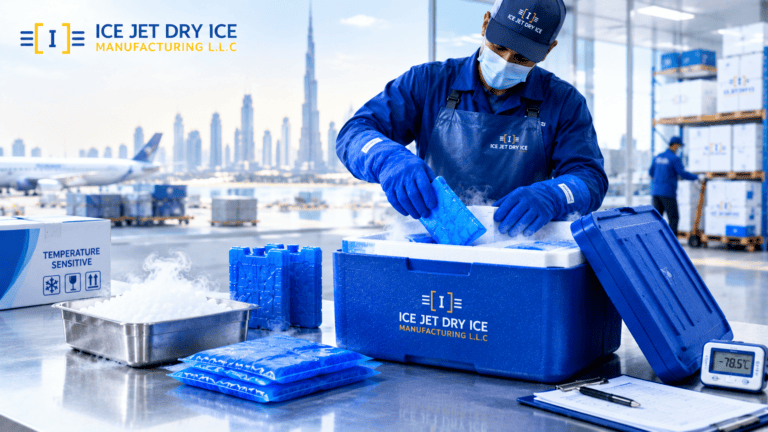
If you’re running quick, single item deliveries, one meal box, a small parcel of medicine, or a handful of samples, a heavier cooling solution is often overkill. This is exactly the situation a gel ice pouch is built for. Available in 100g, 200g, and 400g sizes, a pouch tucks beside the product without adding bulk, and for a short trip, that’s genuinely all the cooling capacity you need. Using a bigger, bulkier product here just adds unnecessary weight and cost without meaningfully improving the outcome.
For Standard Coolers and Rigid Boxes: Gel Ice Packs
For deliveries using an actual cooler or a rigid insulated box, think catering runs, larger food orders, or standard courier cold bags, a gel ice pack is the dependable default. The Single Cell size works for small coolers, the 12 Cell pack flexes around mid size mixed orders, and the 24 Cell version handles bulk cold storage. Because these packs are reusable hundreds of times, they’re also the most cost effective option for businesses making the same type of delivery daily. Freeze it, use it, refreeze it, repeat.
For Irregular Packaging: Gel Ice Sheets
Not every shipment fits neatly into a cooler. Catering trays, curved box interiors, and oddly shaped product batches often don’t have a flat surface for a rigid pack to sit against, and that’s where a rigid pack actually underperforms. A gel ice sheet solves this by staying flexible even when fully frozen, letting it wrap around or lay flat across whatever shape you’re working with. The grid versions (12 Grid and 24 Grid) also let you snap off exactly the coverage you need, so a small tray doesn’t get an oversized sheet wasted on it.
For Long Routes and Bulk Loads: Gel Ice Bottles
The longer and larger the delivery, the more cooling mass you genuinely need to sustain performance across the whole trip. Gel ice bottles, ranging from 200g up to 800g, hold more concentrated cold in a single unit and release it more gradually than a flat pack of the same weight, exactly what a multi stop route or a bulk cold chain shipment demands. This is also where Dubai’s heat punishes weak planning the hardest. A shipment that’s under cooled for a long route won’t just arrive slightly warm, it can arrive genuinely spoiled.
A Simple Rule of Thumb
If you’re unsure which product fits a given delivery, start with trip length as your primary filter. Short and local, reach for a pouch. Standard cooler based delivery, reach for a pack. Irregular or flat packaging, reach for a sheet. Long haul or bulk, reach for a bottle. Many businesses end up stocking two or three of these formats simultaneously, since real world order patterns rarely stay perfectly consistent from one day to the next.
Why This Matters More in Dubai Than Almost Anywhere Else
Cold chain guidance written for cooler climates often underestimates just how fast heat gain happens here. A cooling method that performs adequately in a mild climate can fail noticeably faster under Dubai’s ambient temperatures, particularly during the summer months. This is exactly why locally manufactured cooling products, built and tested specifically for local heat conditions, tend to outperform generic imported alternatives that were never really designed with this climate in mind.
Final Thoughts
Keeping a delivery cold in Dubai isn’t about throwing the strongest possible cooling product at every shipment. It’s about matching the right format to the actual trip, its length, its packaging shape, and the sensitivity of the product inside, so you’re neither overpaying for unnecessary capacity nor risking a delivery that arrives compromised.
Explore IceJet UAE’s full cooling range, from gel ice sheets to gel ice pouches and gel ice bottles, and get help building a cooling plan that matches your actual delivery routes.