Dry ice cleaning has a reputation for being a miracle method, and that reputation creates a problem. Some buyers expect it to remove anything from anything. Others rule it out because they assume it is too aggressive for their equipment. Both are wrong. Dry ice cleaning is excellent at some jobs, average at others, and the wrong tool for a few.
This guide gives you a straight answer on what dry ice cleaning in Dubai can and cannot handle, so you can decide before you book.
How Dry Ice Cleaning Works in One Minute
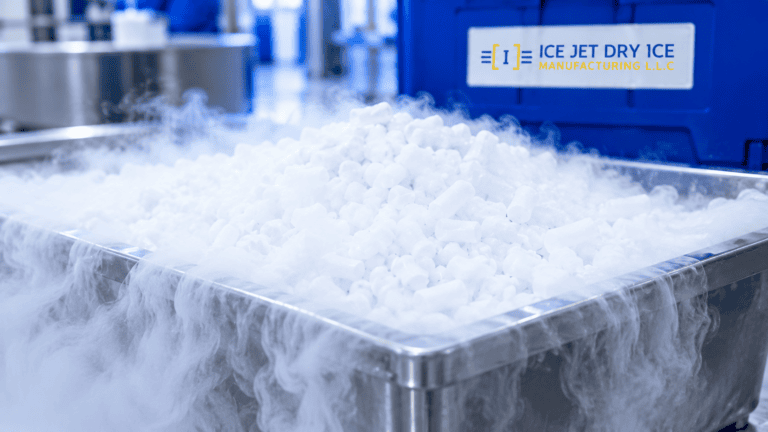
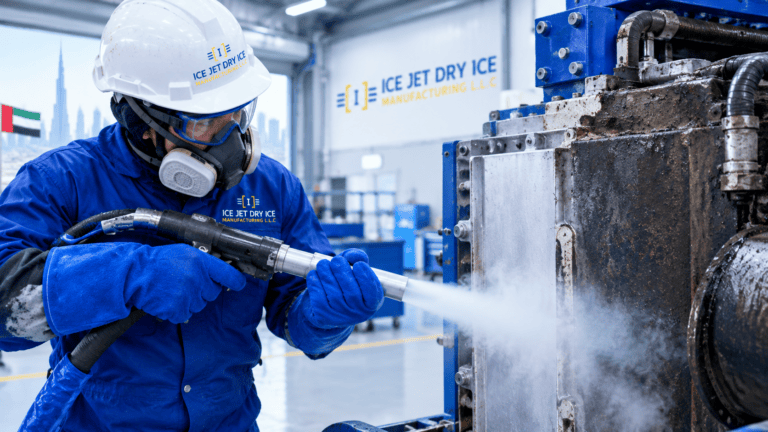
Dry ice cleaning, also called dry ice blasting, fires small pellets of solid carbon dioxide at a surface using compressed air. Three things happen at once. The pellets hit the dirt with force, the extreme cold of about minus 78.5 degrees Celsius makes the contamination brittle and loosens its grip, and the pellets turn into gas on impact. That gas expansion helps lift the loosened material off the surface.
Because the pellets disappear as gas, they leave no cleaning media behind. There is no water to dry, no chemical residue, and no sand or grit to collect afterward. Only the removed dirt remains. If you want the full science, read our explainer on how dry ice blasting works.
What Dry Ice Cleaning Works Well On
- Industrial machinery and production lines: grease, oil, adhesive, carbon buildup, and dust can often be cleaned without dismantling the machine.
- Food and beverage processing equipment: the method uses no water and no chemicals, which suits environments where moisture and residue are a concern.
- Molds: rubber, plastic, and tyre molds can often be cleaned while still in place, which can cut downtime.
- Electrical equipment and panels: dry ice is not conductive and adds no moisture, so it is widely used on electrical components, but only by trained operators following proper safety procedures.
- Engines and automotive parts: engine bays and mechanical parts are commonly cleaned this way because there is no water to push into sensitive areas.
- Printing and packaging machinery: ink and residue buildup can be removed from rollers and parts.
- Fire and soot restoration: light to moderate soot can often be lifted from surfaces without wet cleaning.
What Dry Ice Cleaning Is Not Best At
Honest advice matters more than a sale, so here is where you should think twice.
- Thick rust and heavy corrosion: dry ice removes surface contamination but does not strip metal or grind away heavy rust the way abrasive blasting does.
- Heavy paint or coating removal: it can lift some coatings, but thick or hard coatings are usually slow to remove this way.
- Damaged surfaces: it cleans what is on a surface, not what is wrong with it. It will not repair wear, pitting, or cracks.
- Very delicate or very thin materials: these need a careful assessment before any blasting.
If you are unsure, describe the item and the contamination to a provider and ask for an honest opinion before you commit.
Dry Ice Cleaning vs Other Methods
- Versus sandblasting: sandblasting is abrasive and removes material, and it leaves media to clean up. Dry ice is nonabrasive and leaves no media.
- Versus water or pressure washing: water can damage electronics and leaves wet equipment that needs drying. Dry ice leaves surfaces dry.
- Versus chemical cleaning: chemicals can leave residue and require safe disposal. Dry ice produces no chemical waste.
No method is best for everything. Dry ice wins when you need to clean in place, avoid water, and avoid residue.
Safety and Site Conditions to Know About
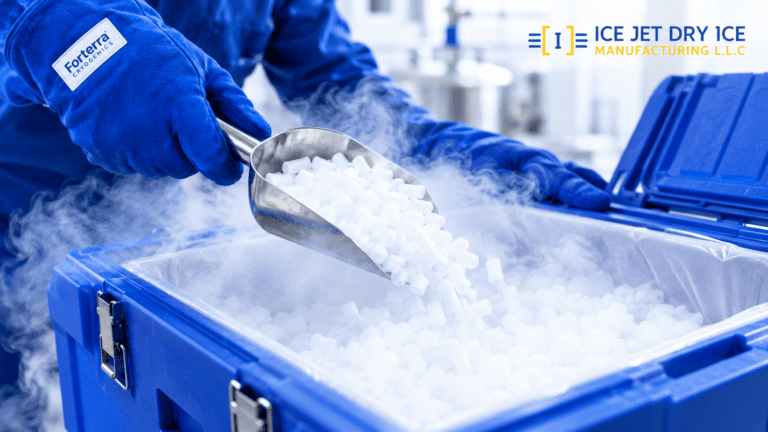
Dry ice turns into carbon dioxide gas, and in a small or poorly ventilated space that gas can build up and displace breathable air. This is a real hazard, not a minor note. Cleaning in enclosed areas needs proper ventilation planning and gas monitoring. The process is also loud, so operators need hearing protection, and handling the pellets requires proper gloves. This is one reason professional operators are worth using for larger jobs. Our guide on safe dry ice storage and handling in the UAE covers the basics.
What to Tell Your Provider Before Booking
You will get a faster and more accurate quote if you can share:
- What you want cleaned, such as a machine, mold, panel, or vehicle part
- What the contamination is, such as grease, carbon, adhesive, soot, or paint
- The material of the surface
- The size of the job and how easy it is to reach
- Whether the work is indoors, in an enclosed area, or outdoors
- When the equipment can be taken offline and for how long
Photos help. Ask what the provider needs on site, such as compressed air supply and access.
What Affects the Cost
Price depends on the size and complexity of the job, how heavy the contamination is, access and location, and how long your equipment can be offline. We explain this in more detail in our guide to dry ice blasting cost in Dubai.
Dry Ice Cleaning With IceJet UAE
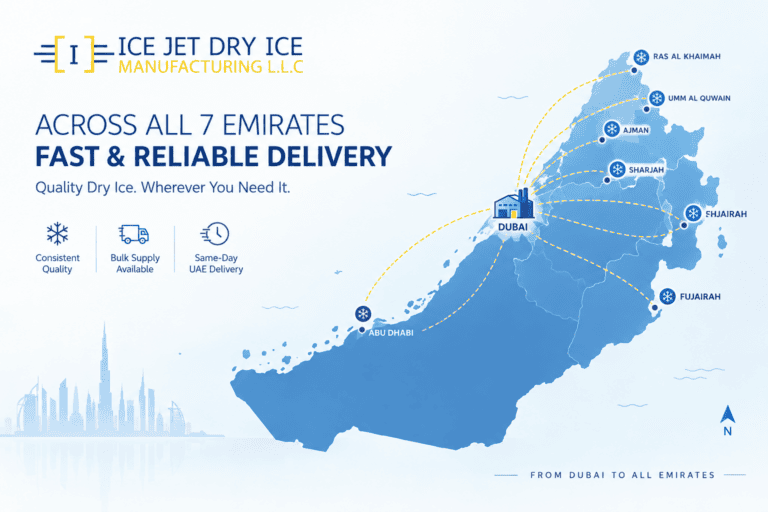
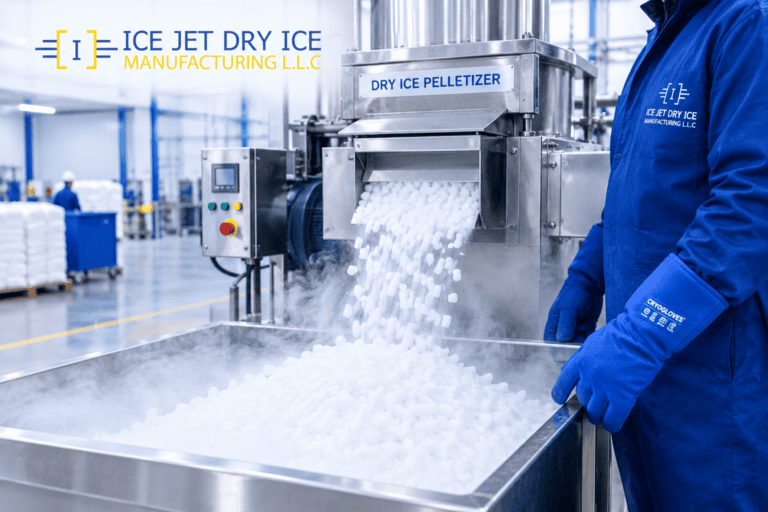
Ice Jet Dry Ice Manufacturing LLC produces dry ice in Al Quoz, Dubai, including 3 mm dry ice pellets used for blasting, and offers dry ice blasting and cleaning services. You can also look at our industrial dry ice blasting service and our cleaning applications page.
Not sure whether your item suits dry ice cleaning? Contact us with a description or photos and we will tell you honestly whether it is a good fit.
Frequently Asked Questions
Does dry ice cleaning damage surfaces? It is non abrasive, so it is generally gentler than sandblasting. Results depend on the material and settings, which is why delicate surfaces should be assessed first.
Is dry ice cleaning safe for electrical equipment? It is commonly used on electrical components because dry ice is not conductive and adds no moisture. It should be done by trained operators who follow the right safety procedures.
Does dry ice cleaning leave residue? The dry ice itself leaves none, because it turns into gas. Only the dirt that was removed remains, and it can be swept or vacuumed up.
Can dry ice clean a car engine bay? Dry ice cleaning is commonly used on engines and mechanical parts because it avoids water. Ask your provider to assess your vehicle before booking.
Does dry ice remove rust? It removes surface contamination, but it is not the best choice for thick rust or heavy corrosion. Abrasive methods are usually better for that.
Is dry ice cleaning noisy? Yes, it can be loud, and operators should wear hearing protection.
Can I do dry ice cleaning myself? Machines can be hired or bought, but safe use needs training, the right equipment, ventilation, and protective gear. For larger or enclosed jobs, a professional provider is the safer choice.
Need dry ice pellets or a dry ice cleaning service in Dubai? Contact IceJet UAE with your job details and we will confirm what is possible.